

Understanding Personal Loans in Pakistan
You can borrow money in Pakistan. This is called consumer financing. Loans help with personal needs. These include education or medical costs. Banks offer term loans for these.
The State Bank of Pakistan sets rules. These are called SBP PRCF. These rules define personal loans. Loans are repaid in monthly payments. These payments are called EMIs.
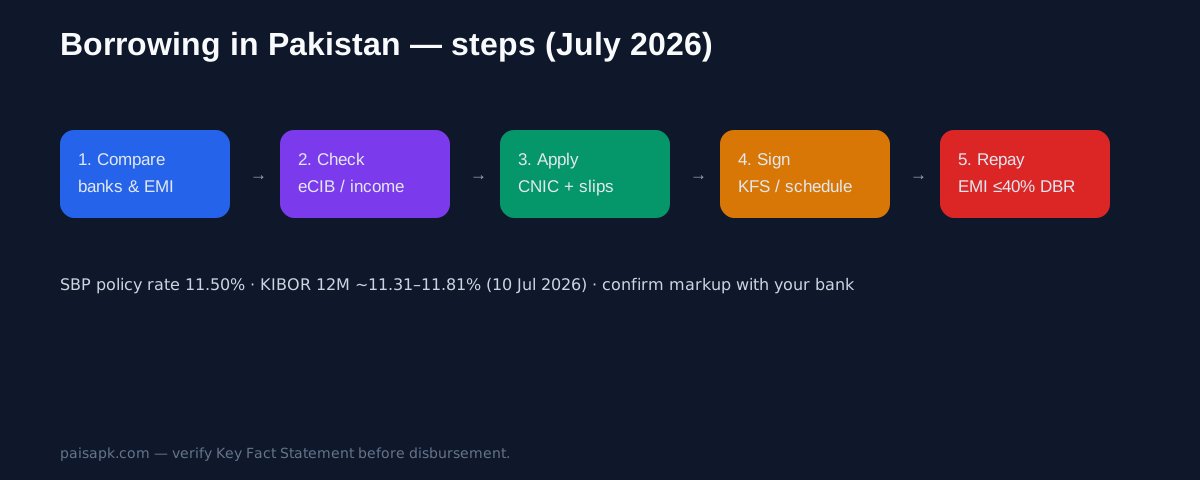
Most loan tenures are four years. Education loans have longer terms. Your debt burden ratio has a limit. It must not exceed 40% of your income. This protects your finances.
Banks must check your credit history. They use SBP CIB for this. Private credit bureaus also help. You must declare all bank exposures. This ensures fair lending.
Banks Offering Consumer Financing
Many banks offer consumer loans. All scheduled banks are included. Development Finance Institutions also provide funds. These follow SBP guidelines.
Habib Bank Limited offers loans. United Bank Limited has options. MCB Bank provides financing. Allied Bank Limited also helps borrowers.
National Bank of Pakistan serves customers. Meezan Bank offers Islamic financing. Bank Alfalah has loan products. Standard Chartered Pakistan is another choice.
U Microfinance Bank provides small loans. JazzCash offers ReadyCash via Bank Alfalah. Other banks include Faysal Bank. Bank of Punjab and Askari Bank also lend money.
Eligibility and Application Process
You must meet certain age limits. Your age should be 21 to 60 years. The loan must end by your 60th birthday. This is a standard bank rule.
You need a minimum income. It ranges from PKR 25,000. Some banks require PKR 50,000 per month. This amount changes by bank. You must be salaried.
You need stable employment. Government or private sector jobs qualify. You must have 1-2 years of tenure. A clean credit history is also vital. Banks check your CIB report.
First, fill out the bank's form. You can do this online. You can also visit a branch. Submit your necessary documents. This starts your application process.
The bank checks your income. They also perform a CIB check. This verifies your credit. Upon approval, you sign an agreement. Funds go to your salary account.
Interest Rates, Fees, and Loan Terms
Banks charge different interest rates. These rates are per year. Processing fees also apply. Collateral requirements vary. Always confirm current rates with the bank.
| Bank | Rate p.a. | Tenure | Processing Fee | Collateral |
|---|---|---|---|---|
| HBL | 29.99%-35.99% | 1-5 years | 1.0%-1.5% of loan | Unsecured; top-up secured |
| UBL (CashPlus) | 18%-28% | 1-4 years | 1.0% of loan | Unsecured; optional security |
| Meezan Bank | 7.5%-12.5% (fixed) | 1-4 years | 1.0% of loan + 0.25% stamp duty | Shariah-compliant structure |
| Bank Alfalah | 16%-27% | 1-4 years | 1.0% of loan + documentation fee | Unsecured |
| Standard Chartered | 15.99%-22.99% | 1-5 years | 1.5% of loan | Unsecured; requires guarantor |
HBL rates range from 29.99% to 35.99%. Their tenure is up to 5 years. They charge 1.0% to 1.5% as a fee. Some top-up loans are secured.
UBL CashPlus charges 18% to 28% yearly. The tenure is up to 4 years. Processing fee is 1.0% of the loan. Loans are usually unsecured.
Meezan Bank offers fixed rates. These are 7.5% to 12.5% yearly. Tenure is up to 4 years. They charge 1.0% processing fee. A 0.25% stamp duty applies for Shariah-compliant loans.
Bank Alfalah rates are 16% to 27%. Loan tenure is up to 4 years. They charge 1.0% fee. A documentation fee is also included. These loans are unsecured.
Standard Chartered charges 15.99% to 22.99%. Tenure can be up to 5 years. Their processing fee is 1.5%. You might need a guarantor.
Required Documents and Procedures
You need a copy of your CNIC. Provide your latest salary slips. These should cover 3 to 6 months. A 6-month bank statement is also required.
Submit an employment letter. A copy of your contract works too. Proof of residence is needed. A utility bill serves this purpose. Include passport-size photos.
Sometimes a guarantor is needed. They must provide their CNIC. Their salary proof is also required. Gather all documents carefully. This speeds up your application.
Choose your loan type first. Options include salary transfer loans. You can pick instant digital loans. Islamic financing is also available. Confirm your eligibility with the bank.
Complete the application form next. Submit all gathered documents. The bank performs credit checks. You then sign the loan agreement. Funds disburse in 2 to 10 days.
Key Benefits and Risks of Borrowing
Loans give quick access to funds. This helps in emergencies. You get predictable monthly payments. Tenures are usually fixed. Islamic options are competitive.
High markup can cause strain. Your payments might become difficult. Late payments incur penalties. These can be up to 2% monthly. Avoid over-borrowing at all costs.
Keep total EMIs below 40% of income. This is a critical limit. Compare effective interest rates. These include all fees. Check pre-payment terms carefully.
Maintain a clear CIB record. This helps future credit access. Your credit history matters. A good record means easier approvals. It helps with better terms too.
Regulatory Changes and Market Trends
SBP cut personal loan tenure. This happened in 2021. The maximum is now 4 years. This limits household debt growth. It makes borrowing safer for many.
Digital instant loans are popular. Alfa by Bank Alfalah offers them. JazzCash provides these loans too. Amounts range from PKR 500. They go up to PKR 30,000.
These digital loans have short terms. They are repayable in 8 weeks. Weekly rates start from 8%. This offers quick, small financing. Many people use these options.
Islamic banks have expanded services. They offer Shariah-compliant financing. They use Tawarruq structures. Murabaha structures are also common. Fintech credit scoring helps approvals.
Tips for Smart Borrowing
Keep your EMIs below 30% of income. This creates a financial cushion. Use digital trackers for payments. Set up auto-debits to avoid late fees. This helps your credit score.
Review your loan statements often. Check pre-payment options. Early settlement saves markup. Consider Islamic financing for fixed rates. They often have no late penalties.
Try to negotiate processing fees. Look for promotional discounts. Banks offer these often. Such deals save you money. Be smart about your borrowing choices.
Common Loan Problems and Solutions
A CIB default can block approval. First, get your CIB report. Then, settle any outstanding dues. Request an update after payment. You can then reapply for a loan.
High markup can increase EMI. You can refinance your loan. Balance transfer to a lower-rate bank. This reduces your monthly burden. It saves you money over time.
Disbursement might be slow. Submit complete documents early. Use digital channels for faster service. This speeds up the process. Funds arrive quicker.
Tenure extension can be inflexible. Look for top-up facilities. These are usually available after 12 months. They can extend your tenure. They might also increase loan limits.
تاریخ: 25 جون 2026
July 2026 borrowing landscape
The State Bank of Pakistan held the policy rate at 11.50% p.a. after the Monetary Policy Committee meeting on 15 June 2026. The overnight reverse-repo corridor runs from 10.50% (floor) to 12.50% (ceiling), with the weighted-average overnight repo rate at 11.43% on 9 July 2026.
Published KIBOR on 10 July 2026 shows 3-month at 11.34% / 11.59%, 6-month at 11.33% / 11.58%, and 12-month at 11.31% / 11.81% (bid/offer). Personal and consumer loans are typically priced as KIBOR plus a bank spread — always request the Key Fact Statement and total cost in rupees before signing.
| Benchmark | July 2026 | Source |
|---|---|---|
| SBP policy rate | 11.50% p.a. | SBP.org.pk |
| KIBOR 12M (bid/offer) | 11.31% / 11.81% | SBP economic data, 10 Jul 2026 |
| Overnight repo (weighted avg) | 11.43% | SBP, 9 Jul 2026 |
SBP consumer-financing rules cap maximum personal-loan tenor and require eCIB checks. Keep total EMIs within the 40% debt-burden ratio limit where applicable.