

Understanding Profit on Current Accounts
Pakistani banks offer Profit on Current Accounts. This scheme is known as POCA. The State Bank of Pakistan (SBP) oversees POCA. Customers can earn profit on their current account balances. This profit replaces traditional interest payments.
POCA aims to increase returns for depositors. It does so without losing account flexibility. Islamic banking principles guide these accounts. Returns link to actual profit-and-loss sharing (PLS) pools. This aligns bank costs with market yields.
SBP regulations set clear rules for POCA. Banks must pay profit on local currency current accounts. They follow SBP directives for this. Banks also use their own PLS pool management rules. This ensures fair profit distribution.
Banks must tell customers how profit is paid. The profit distribution frequency needs transparency. The profit calculation method also needs clear disclosure. This helps customers understand their earnings.
Banks and Profit Rates Offered
Many major banks in Pakistan offer POCA accounts. These include conventional and Islamic banks. Each bank has its own account name. Profit rates can differ across banks. Some banks offer tiered profit rates.
| Bank | Account Name | Profit Rate(s) |
|---|---|---|
| Habib Bank Limited | PLS Savings Chequing Account | 9.50% p.a. (simple) |
| Meezan Bank | Bachat Account | Tier 1: 14%; Tier 2: 11.5% |
| Bank AL Habib | Mahana Munafa Account | 9.00%10.50% p.a. |
| Allied Bank Limited | PLS Current Account (ABL PLS) | Negotiated; SBP floor |
| National Bank of Pakistan | NBP PLS Current Account | Negotiated; SBP floor |
| United Bank Limited | UBL PLS Current Account | Negotiated; SBP floor |
| MCB Bank | MCB PLS Current Account | Negotiated; SBP floor |
| Bank Alfalah | Alfalah PLS Current Account | Negotiated; SBP floor |
Some banks like HBL offer a simple profit rate. HBL PLS Savings Chequing Account pays 9.50% per year. Meezan Bank offers a tiered system. Meezan Bank Bachat Account can give 14% on Tier 1. It offers 11.5% on Tier 2.
Bank AL Habib provides 9.00% to 10.50% yearly. Other banks list "negotiated" rates. These include ABL, NBP, UBL, MCB, and Bank Alfalah. Their PLS Current Accounts have flexible rates.
Negotiated rates often link to SBP guidelines. Islamic banks must pay 75% of weighted average pool yield. Conventional banks may link to 50 bps below SBP policy rate. These links ensure market alignment.
How to Open a POCA Account
Many types of people can open a POCA account. Resident individuals qualify. Non-resident individuals can also apply. Sole proprietorships are eligible. Corporate entities may also open POCA accounts.
Banks require a minimum initial deposit. This amount varies by bank. Common minimums are PKR 5,000 to PKR 10,000. You must also complete Know Your Customer (KYC) steps. SBP guidelines mandate these KYC requirements.
The application process is straightforward. First, get an account opening form. You can find forms at a branch or online. Next, submit your KYC documents. You must select your profit distribution frequency. This can be monthly or quarterly.
You need to accept the PLS pool terms. The profit-sharing formula also needs your acceptance. Then, make the minimum initial deposit. Your account will become active within 1 to 2 business days. Profit credits will start according to your chosen frequency.
Account Features and Charges
Banks calculate profit using different methods. Some use a monthly average balance. HBL, ABL, NBP, MCB, and Bank Alfalah do this. Meezan Bank uses a daily closing balance tiers system. UBL calculates profit based on daily minimum balance.
Profit frequency also varies. Meezan Bank, Bank AL Habib, UBL, and Bank Alfalah pay monthly. HBL, NBP, MCB, and ABL may pay quarterly or monthly. You should confirm this when opening your account. This choice can affect your total earnings.
Accounts may have maintenance fees. HBL charges PKR 250 per month. Bank AL Habib charges PKR 200 per month. ABL has a PKR 300 monthly fee. NBP charges PKR 250 per month.
UBL charges PKR 250 monthly. MCB charges PKR 200 per month. Bank Alfalah has a PKR 150 monthly fee. Meezan Bank charges no maintenance fee. However, a minimum balance usually applies to avoid fees.
Required Documents for Application
You need several documents to open a POCA account. A valid CNIC is required. NICOP or a passport also works. These prove your identity. They are part of the KYC process.
Proof of income may be needed. This applies to corporate accounts. High-value individual accounts might also require it. A recent utility bill or bank statement is also necessary. This verifies your address.
You also need passport-sized photographs. Completed KYC forms are a must. Account opening forms must be fully filled. Branches may ask for more corporate documents. Examples include board resolutions.
Benefits and Important Points
POCA accounts offer many benefits. They provide high liquidity. You can make unlimited transactions. This is just like a standard current account. You also earn profit on your funds.
Profit earnings are competitive. Rates are often similar to savings accounts. Islamic accounts offer Shariah compliance. They use a profit-sharing model. This is important for many customers.
However, risks exist with POCA accounts. Profit rates can vary. Returns depend on the PLS pool performance. Profit earnings are also taxable. Different tax rates may apply.
Loss sharing is also a risk. Pools may incur losses. This is rare under careful management. You should always read the terms. Understand all risks before opening an account.
SBP removed minimum profit rates in January 2026. This applies to institutional deposits. Corporate funds now have fully negotiated rates. Islamic banks must pay 75% of pool yield. This applies to PKR savings deposits.
SBP supports digital account opening. Many banks now offer this. You can open current accounts via mobile apps. This makes the process faster. Digital onboarding is growing in Pakistan.
Compare effective annual profit rates. Do not just look at simple rates. Maintain your minimum balance. This helps avoid maintenance fees. Fees can reduce your total profit.
Opt for monthly profit payouts. This can improve the compounding effect. Monitor the SBP policy rate. Central bank rate changes influence bank profit rates. This helps you choose the best account.
You may face common problems. Delayed profit credit can occur. Verify your chosen profit cycle. Follow up with your bank branch. They can help resolve these issues.
Your balance might fall below the minimum. Banks may forfeit your profit. Always keep the required threshold. Dormant accounts may incur fees. Ensure periodic transactions to keep your account active.
Documentation issues can cause delays. Ensure all KYC documents are clear. Make sure they are up to date. This speeds up your application. Proper documents help avoid problems.
POCA اسکیم پاکستان میں مالیاتی شمولیت اور اسلامی بینکاری کی ترقی میں ایک اہم کردار ادا کر رہی ہے۔ یہ اسکیم صارفین کو اپنے موجودہ اکاؤنٹس پر منافع کمانے کا موقع فراہم کرتی ہے، جو روایتی بینکاری سے ہٹ کر ایک نیا متبادل ہے۔ چونکہ پاکستان میں اسلامی بینکاری کی مانگ بڑھ رہی ہے، POCA جیسے مصنوعات اس رجحان کو مزید تقویت دیں گی۔ مستقبل میں، ہم دیکھ سکتے ہیں کہ مزید بینک POCA اکاؤنٹس کی پیشکش کرتے ہیں اور ان کی شرحوں میں مقابلہ بڑھتا ہے۔ ڈیجیٹل بینکاری کے فروغ کے ساتھ، POCA اکاؤنٹس کو آن لائن کھولنا اور منظم کرنا بھی آسان ہو سکتا ہے، جس سے ان کی رسائی مزید بڑھے گی۔July 2026 interest rate landscape
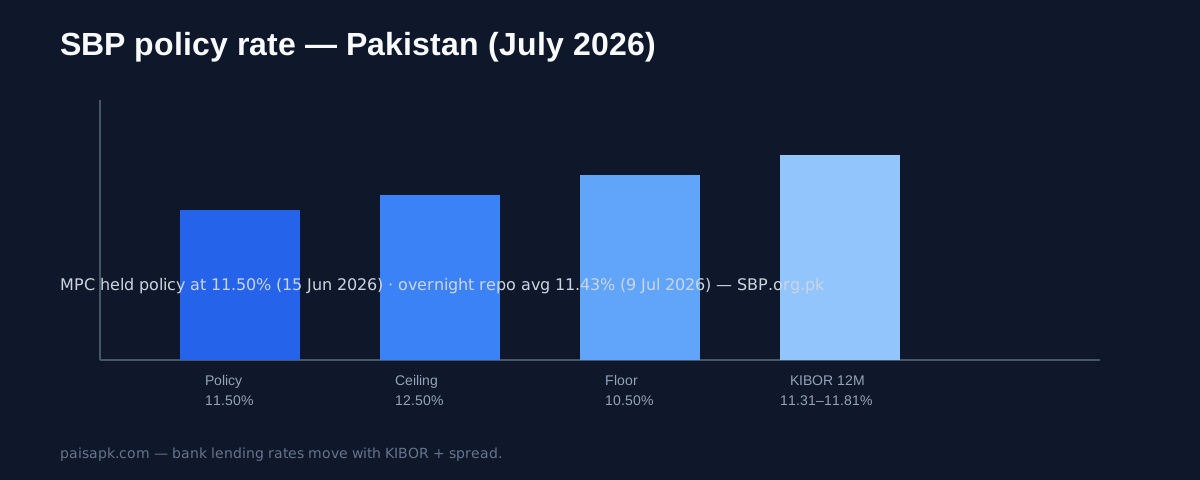
Pakistan’s headline lending anchor in mid-2026 is the SBP policy rate at 11.50% p.a., unchanged at the 15 June 2026 MPC. Bank loan and deposit pricing typically tracks KIBOR plus a spread, not the policy rate alone.
On 10 July 2026, SBP published KIBOR at 11.31%–11.81% for 12-month tenor (bid/offer). The weighted-average overnight repo rate was 11.43% on 9 July 2026. Use these benchmarks when comparing personal, auto and housing finance quotes.
| Rate | July 2026 |
|---|---|
| SBP policy rate | 11.50% p.a. |
| Repo ceiling / floor | 12.50% / 10.50% |
| KIBOR 12M (bid/offer) | 11.31% / 11.81% |
Profit on current accounts (POCA) and conventional loan markup both respond to money-market yields — compare effective annual return or cost, not marketing labels alone. Source: SBP.org.pk economic data, July 2026.